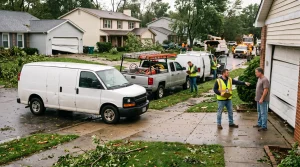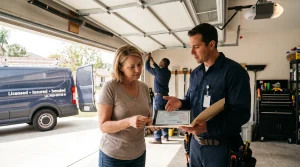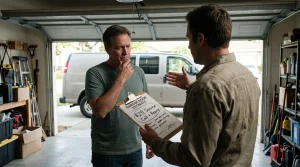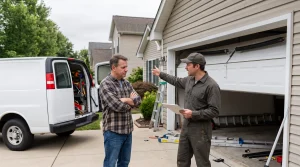
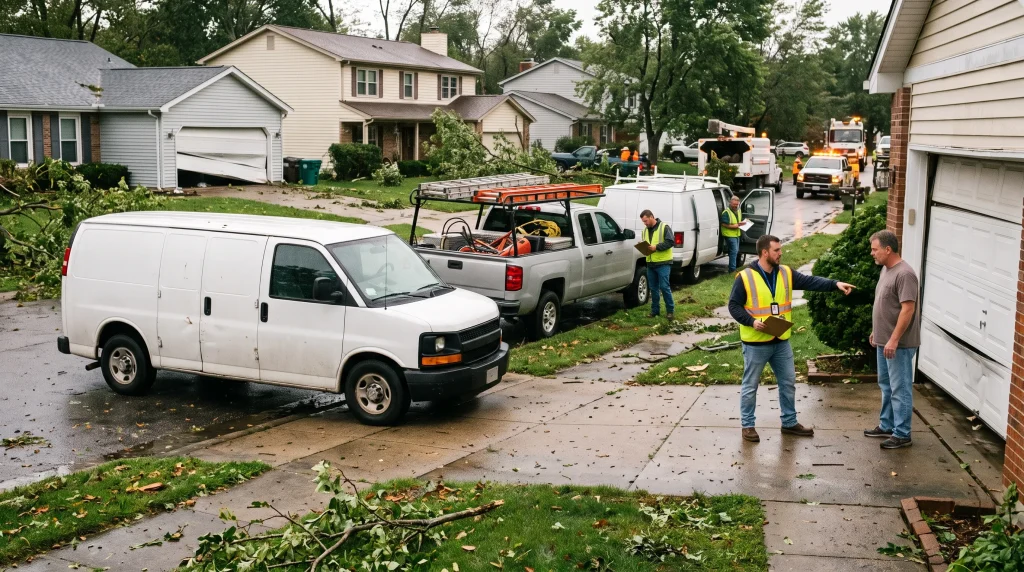
Garage door “storm chasers” follow severe weather because damaged doors and openers create urgent, emotional homeowners who are less likely to shop around or ask questions before agreeing to a garage door repair. They typically show up unsolicited within days of a storm, drive unmarked or out-of-state vehicles, push same-day insurance paperwork, and vanish once they’re paid, sometimes leaving work unfinished or billing for damage that never existed. Before letting any unsolicited crew touch your door after a storm, check for a local address, a license, and insurance, and get a second quote if anything about the visit feels rushed.
Key Takeaways
- Storm chasers target damaged properties specifically because urgency makes homeowners skip normal vetting.
- Unsolicited door-to-door offers right after severe weather are the clearest single warning sign.
- Out-of-state plates and unmarked vehicles are common, though not universal, among storm-chaser crews.
- Pressure to sign insurance paperwork on the spot benefits the contractor more than it benefits you.
- A legitimate local company rarely needs to canvass a neighborhood to find work after a storm.
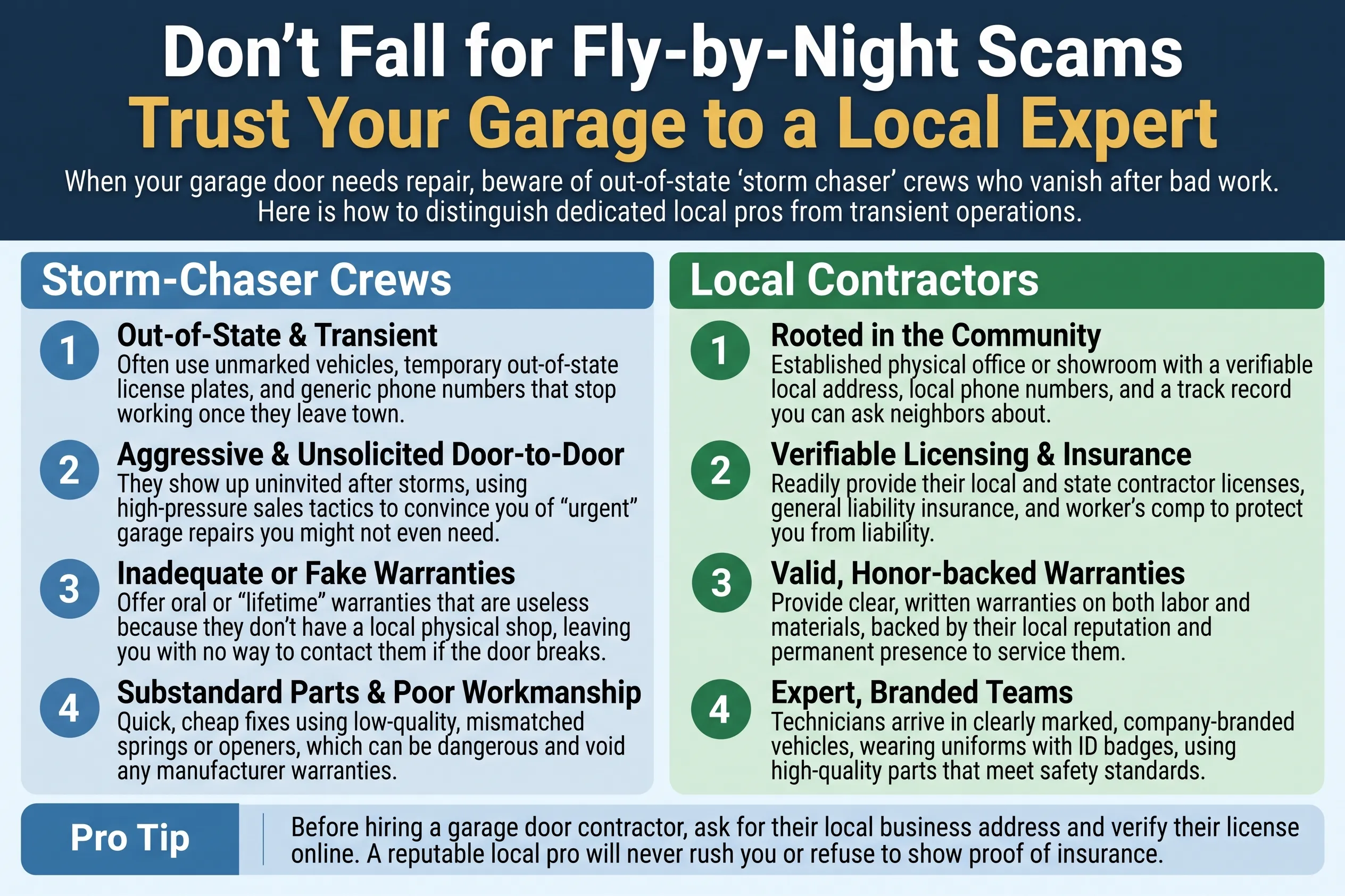
Local Contractor vs. Storm-Chaser Crew
Situation | Local, Legitimate Contractor | Storm-Chaser Crew |
How they found you | You called them, or found them through a search or referral | They knocked on your door within days of the storm |
Vehicle | Marked, local plates, consistent with a real local business | Unmarked or out-of-state plates |
Paperwork | Written estimate, explained before you sign anything | Pushes an insurance authorization form immediately |
History | Verifiable local address and a business history you can check | No local presence, appears right after severe weather |
Timeline | Willing to schedule an inspection on your timeline | Pressures same-day approval before they leave |
Follow-up | Reachable weeks or months later for warranty issues | Unreachable once the check clears |
1. They Showed Up Unsolicited, Within Days of the Storm
The single clearest sign of a storm chaser is timing: you didn’t call them, they came to you, and they did it within a day or two of a hailstorm, high winds, or a fallen tree causing visible damage in your neighborhood. This isn’t how legitimate local repair companies typically generate business; most rely on searches, referrals, and repeat customers rather than driving through storm-damaged neighborhoods looking for visible wreckage to knock on doors about. The urgency of the moment, a broken door, a car trapped inside, a security concern, is exactly what makes this approach effective, because it short-circuits the normal instinct to compare a few quotes before agreeing to anything.
How to Respond to an Unsolicited Post-Storm Offer
- Ask how they knew to come to your specific address
- Decline to sign anything on a first, unsolicited visit
- Tell them you’ll call a company of your own choosing for a comparison quote
- Note whether they pressure you to decide before they leave
If you want the full list of scam warning signs beyond storm-chasing, including pricing tricks and licensing red flags, read How Do You Know If a Garage Door Repair Company Is Scamming You? 7 Warning Signs to Watch For.
2. The Vehicle Has Out-of-State Plates or No Company Markings
Storm-chaser crews often travel from state to state, following major weather events across a region, which shows up as out-of-state plates on an otherwise unmarked truck. This isn’t a guaranteed sign on its own; some legitimate contractors do travel for specialized work, but combined with an unsolicited knock right after a storm, it’s a pattern worth noticing rather than dismissing outright. A truck with no company name, no logo, and no local plates should prompt more questions, not fewer, especially if they’re pushing you toward a full garage door installation rather than a smaller repair, since that’s a much larger job to trust to an unverified crew.
What to Check on Arrival
- Look for a company name, phone number, and logo on the vehicle
- Note the state on the license plate and ask directly how far they traveled
- Ask for a local address, not just a phone number, before letting anyone inside
The International Door Association’s scam awareness resource documents this exact pattern nationwide, noting that scam operators frequently target homeowners during emergencies, including right after severe weather, and pressure them into paying inflated prices before they have time to verify who they’re actually hiring.
3. They Push You to Sign Insurance Paperwork Immediately
A common storm-chaser tactic is presenting an “insurance authorization” or “assignment of benefits” form and pressuring you to sign it on the spot, before you’ve had time to read it or call your insurance company yourself. This document can sign over control of your claim to the contractor, letting them negotiate directly with your insurer and, in some cases, bill for more than the actual repair costs. Once signed, you may have limited say in what work is approved or how the claim is ultimately settled, which is precisely why reading it carefully before signing matters so much.
Before You Sign Any Insurance-Related Document
- Read the entire document before signing anything, regardless of the time pressure
- Call your insurance company yourself to confirm what the document actually authorizes
- Ask what happens if you decide not to use this contractor after signing
- Get a copy of anything you sign for your own records
4. They Disappear Once the Check Clears
Perhaps the most damaging pattern is what happens after payment: a storm-chaser crew that was highly responsive and pushy before getting paid becomes completely unreachable afterward, especially if a warranty issue or incomplete work turns up weeks later. A legitimate local business has an ongoing reputation to protect and a physical presence you can return to, which gives them a real incentive to stand behind their work.
A company you already call for regular garage door maintenance has that same incentive built in, since they expect to see you again long after a single storm-related visit. A company with no fixed address and no local history has, by comparison, very little to lose by disappearing once the money has changed hands.
How to Protect Yourself Before Paying
- Confirm a local address and phone number you can reach months from now, not just today
- Ask specifically what warranty applies to the work and get it in writing
- Avoid paying the full amount before the work is fully completed and inspected
- Search the company name for reviews or complaints before finalizing payment
The International Door Association’s LinkedIn post on garage door scam awareness makes the same point directly: don’t be afraid to report a company to organizations like the BBB, and share trusted resources with neighbors who may be targeted by the same crew.
If a storm chaser also quoted you a price that felt off, or pressured you with a “today only” discount, read Is a Garage Door Repair Quote Too Good to Be True? 5 Bait-and-Switch Pricing Tricks to Watch For, since these two tactics frequently show up together.
And since storm-chaser crews are especially likely to be unlicensed, read How Can You Tell If a Garage Door Technician Is Actually Licensed and Insured? 6 Questions to Ask before letting anyone start work on your door.
Get a Second Opinion Before Letting a Storm Chaser Near Your Door
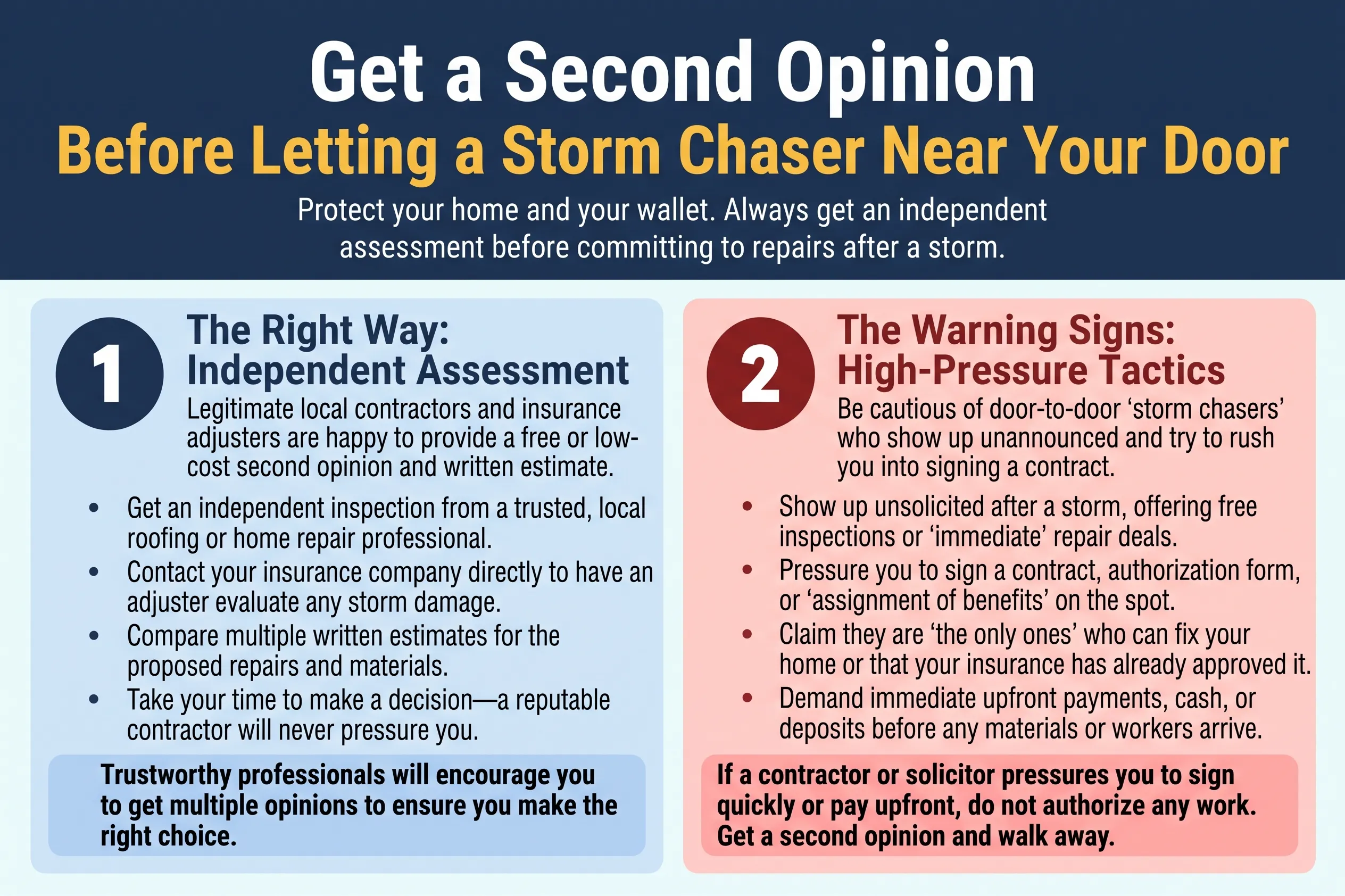
Severe weather creates real damage and real urgency, but it also creates the exact conditions storm chasers rely on to skip past your normal vetting. Take the extra day to call a local, verifiable company for a second opinion before signing anything with a crew that showed up unannounced.
DoorForce LLC provides free storm-damage inspections from local, licensed technicians serving Toledo, OH, technicians you can reach long after the job is done. Contact us or give us a call before you sign anything with an unfamiliar crew.