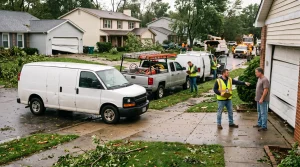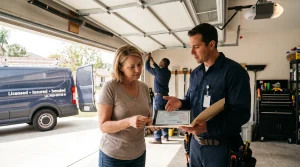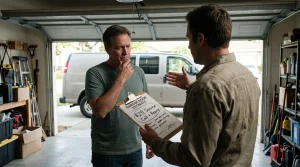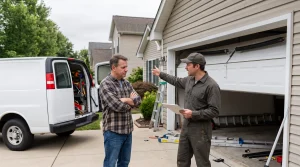
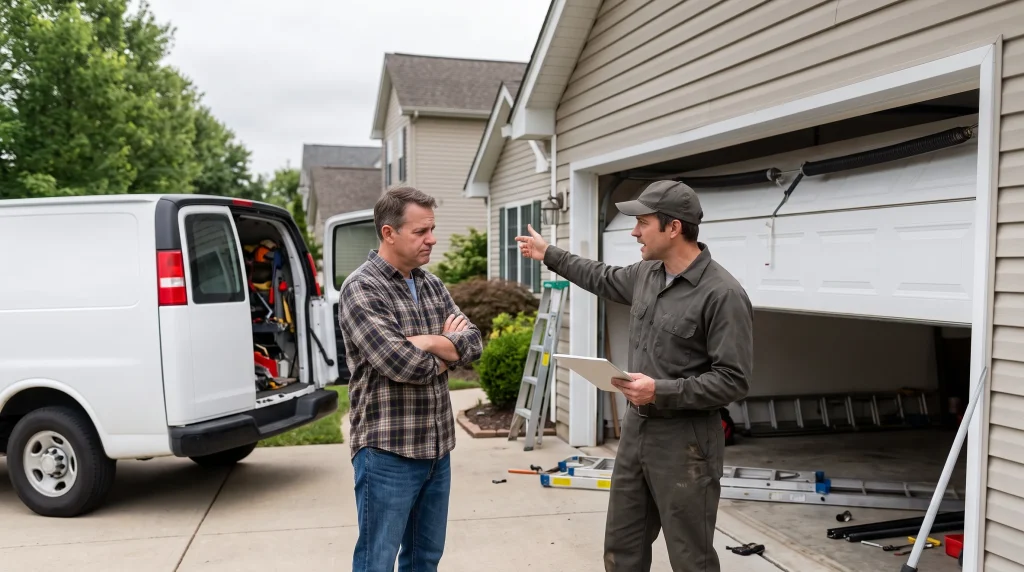
A garage door repair scam almost always shows up in the same handful of ways: a quote that jumps once the technician is standing in your driveway, no proof of license or insurance, high-pressure “today only” pricing, cash-only demands with nothing in writing, and unsolicited knocks right after a storm. If a company shows even two of these signs, get a second opinion before you sign or pay anything.
Key Takeaways
- The single biggest red flag is a price that changes once the technician is on-site with no clear reason.
- A real company can produce a license number and insurance certificate on request, on the spot.
- Storm-chasers who knock door to door right after severe weather are the most common seasonal scam pattern.
- Cash-only, no-written-estimate jobs give you no paper trail if something goes wrong.
- You should always be shown the failed part before agreeing to a repair or full replacement.
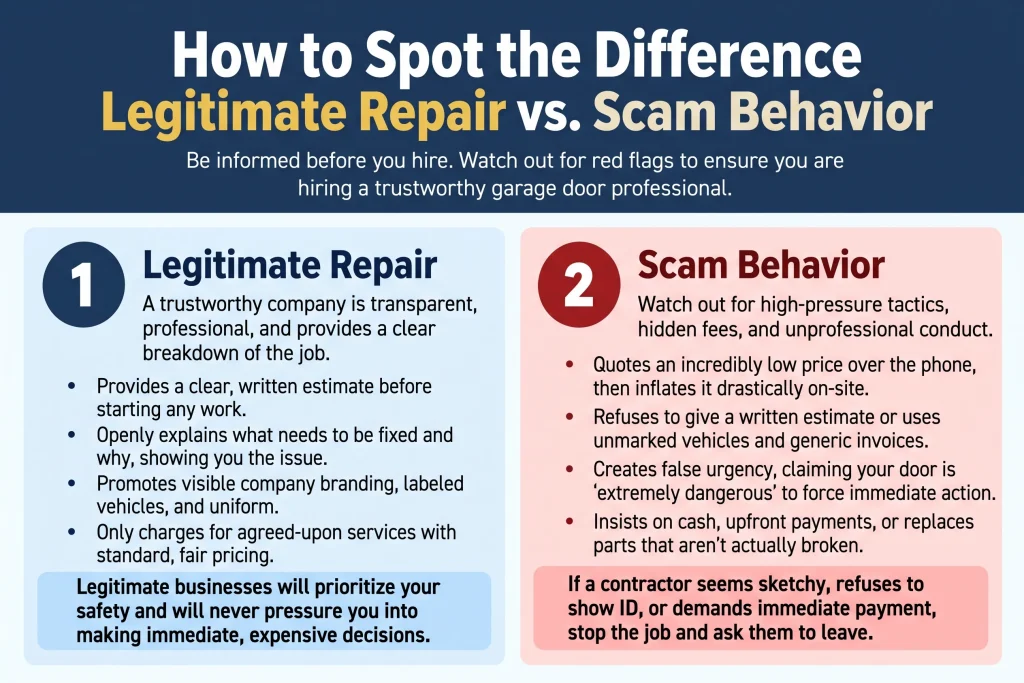
Legitimate Repair vs. Scam Behavior
Situation | Legitimate Company | Scam Red Flag |
Pricing | Written estimate before work starts; price changes only with a shown reason | Quote balloons on-site with no clear explanation |
Credentials | License and insurance shown immediately, verifiable with local board | Deflects, stalls, or shows unverifiable paperwork |
Timing | Scheduled visit you requested | Unsolicited knock right after a storm |
Payment | Invoice, itemized parts, multiple payment options | Cash-only, no invoice, no paper trail |
Urgency | Explains the actual safety risk, gives you time to decide | Manufactures urgency to rush a signature |
Business presence | Verifiable address, marked vehicle, real reviews | No address, unmarked truck, no history |
Diagnosis | Shows you the failed part, explains it plainly | Refuses to show you anything, pushes full replacement |
1. The Quote Seems Impossibly Low, Then Balloons Once They’re at Your House
This is the most common complaint homeowners report. A company advertises a rock-bottom service call fee or “$49 spring repair,” then once the technician is inside your garage, the price triples for “parts they didn’t expect to need.” Legitimate diagnostic visits come with a written estimate before any work starts, not after the door is already in pieces. Staying current on routine garage door maintenance also makes it harder for a scammer to convince you that minor, well-documented wear is actually a major emergency.
How to Spot Bait-and-Switch Pricing Before You Agree to Anything
- Ask for the full price range over the phone, before the technician arrives
- Request a written estimate before any tools come out
- Treat “the price changed” without a shown reason as a stop-work signal
- Compare the on-site quote to at least one other company’s estimate
If you want the full breakdown of pricing tricks scammers use, including padded “trip fees” and fake part swaps, read Is a Garage Door Repair Quote Too Good to Be True? 5 Bait-and-Switch Pricing Tricks to Watch For.
2. They Can’t, or Won’t, Prove They’re Licensed and Insured
Ask for a license number and a certificate of insurance before anyone touches your door. A legitimate technician has both ready immediately, because they carry them for every job. A scammer will deflect (“we don’t need a license for this”) or hand you something that doesn’t hold up when you call to verify it.
How to Verify a Garage Door Technician’s License and Insurance
- Ask for the license number directly, not just a laminated card
- Call your state or local licensing board to confirm it’s active
- Ask for the insurance carrier’s name and call the carrier to verify coverage
- Confirm the technician’s name matches the license on file
If you want the exact questions to ask and how to verify the answers, read How Can You Tell If a Garage Door Technician Is Actually Licensed and Insured? 6 Questions to Ask.
3. They Show Up Unsolicited Right After a Storm
After hail, high winds, or a fallen branch damages your property, a wave of unfamiliar trucks with out-of-state plates often follows. These crews knock on doors offering “free storm damage inspections,” push same-day signatures, and vanish once they’re paid.
Red Flags Storm-Chaser Crews Show
- Knocked on your door instead of you calling them
- Out-of-state plates or an unmarked vehicle
- Pressure to sign an insurance claim form on the spot
- No local address or verifiable business history
Homeowner advocacy groups warn about exactly this pattern. The International Door Association’s LinkedIn post on garage door scam awareness specifically calls out these unsolicited, post-storm sales tactics and encourages homeowners to verify credentials before letting anyone start work.
If a storm just came through your area and unfamiliar trucks are already knocking, read Why Do Garage Door “Storm Chasers” Show Up After Every Big Storm? 4 Red Flags to Check Before You Hire.
4. They Demand Cash Upfront, With Nothing in Writing
A scam operation wants cash, wants it before work starts, and wants nothing documenting what was agreed to. If there’s no invoice, no itemized parts list, and no company letterhead, you have no way to dispute the work later, no warranty claim, and often no way to even prove the company you paid actually exists. A written estimate and a paid invoice aren’t paperwork for its own sake; they’re your only recourse if the repair fails in a week.
The International Door Association’s scam awareness resource outlines exactly this kind of situation, including how to report a fraudulent business and connect with a properly credentialed dealer instead, steps that only work if you kept some kind of paper trail in the first place.
What a Legitimate Written Estimate Should Include
- The specific part(s) being repaired or replaced
- Labor cost separated from parts cost
- The company’s name, address, and license number
- A payment method other than cash-only
5. They Push a “Same-Day Emergency” Fee to Scare You Into Paying More
Genuine emergencies exist: a door that won’t close and locks your car in, or a spring that’s snapped with the door stuck open, are real safety issues. But some companies manufacture urgency on jobs that aren’t actually emergencies specifically to shortcut your decision-making. A legitimate technician can explain, in plain terms, exactly why something is urgent and what happens if you wait a day for a second quote.
How to Tell If an Emergency Fee Is Justified
- The technician can explain, in plain terms, the actual safety risk of waiting
- The urgency matches a real hazard: a door stuck open, a security risk, a blocked vehicle
- You’re given time to ask questions, not rushed into a decision
- The fee is disclosed before the technician arrives, not sprung on you after
6. There’s No Local Address, and the Truck Has No Company Markings
A real, established company has a physical business address you can look up, a working phone number answered by a person, and a marked vehicle. Scammers frequently operate out of unmarked trucks with only a cell phone number, and searching their “company name” turns up nothing.
How to Verify a Company’s Business Address and Reviews
- Search the company name plus “reviews” and check for a real history, not a week-old listing
- Confirm a physical address exists and matches what’s on their invoice
- Check for a marked vehicle and uniformed technician on arrival
- Cross-check the company against consumer directories and reviews before letting anyone inside
7. They Refuse to Show You the Failed Part or Explain the Diagnosis
Before you approve a repair, especially a “you need a full replacement” recommendation, ask to see the broken part and have the failure explained in terms you can understand. A technician who avoids showing you anything or insists you “just trust them” is the clearest sign the diagnosis is manufactured to upsell you. If a full replacement genuinely is the right call, a legitimate quote for garage door installation should be just as clearly itemized as any repair estimate.
What a Legitimate Diagnosis Should Look Like
- The technician shows you the physical failed part
- The explanation makes sense in plain, non-technical language
- A repair option is offered and explained before a full replacement is pushed
- You’re given time to get a second opinion on major recommendations
Don’t Let a Scam Cost You More Than the Repair Ever Would
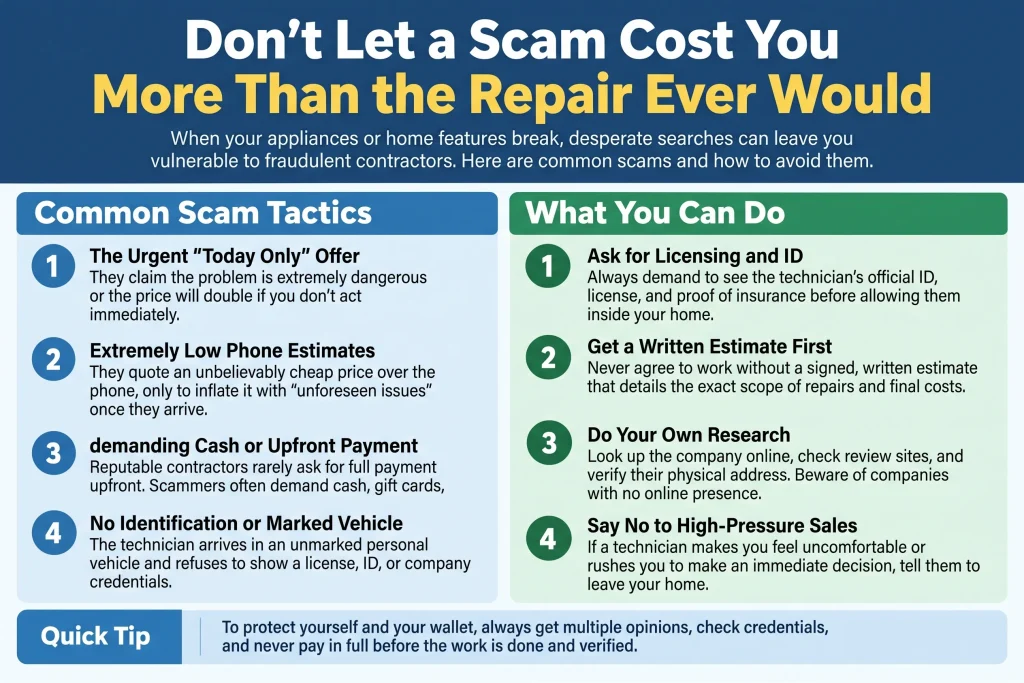
Most garage door scams follow the same playbook: create urgency, avoid paperwork, and hope you don’t ask questions. A legitimate technician has nothing to hide on any of the seven points above. If a company you’re considering is hitting even two or three of these red flags, get a second, written quote before you pay anyone or let work begin.
DoorForce LLC provides free, written, itemized inspections with licensed and insured technicians serving Toledo, OH, and the surrounding area. Contact us or give us a call and get a second opinion before you sign anything.