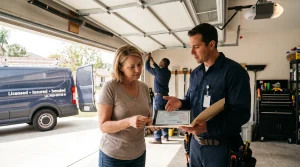
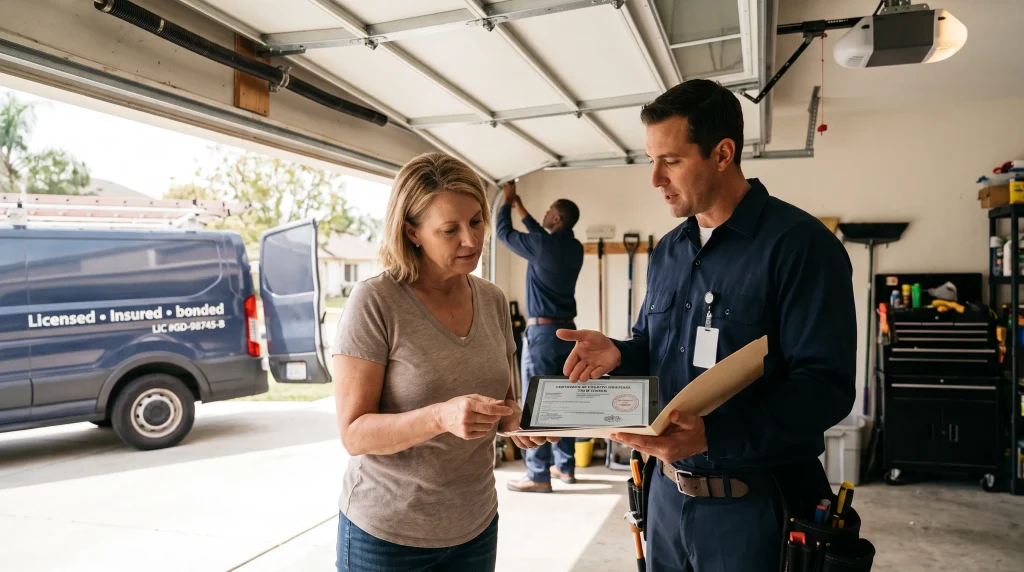
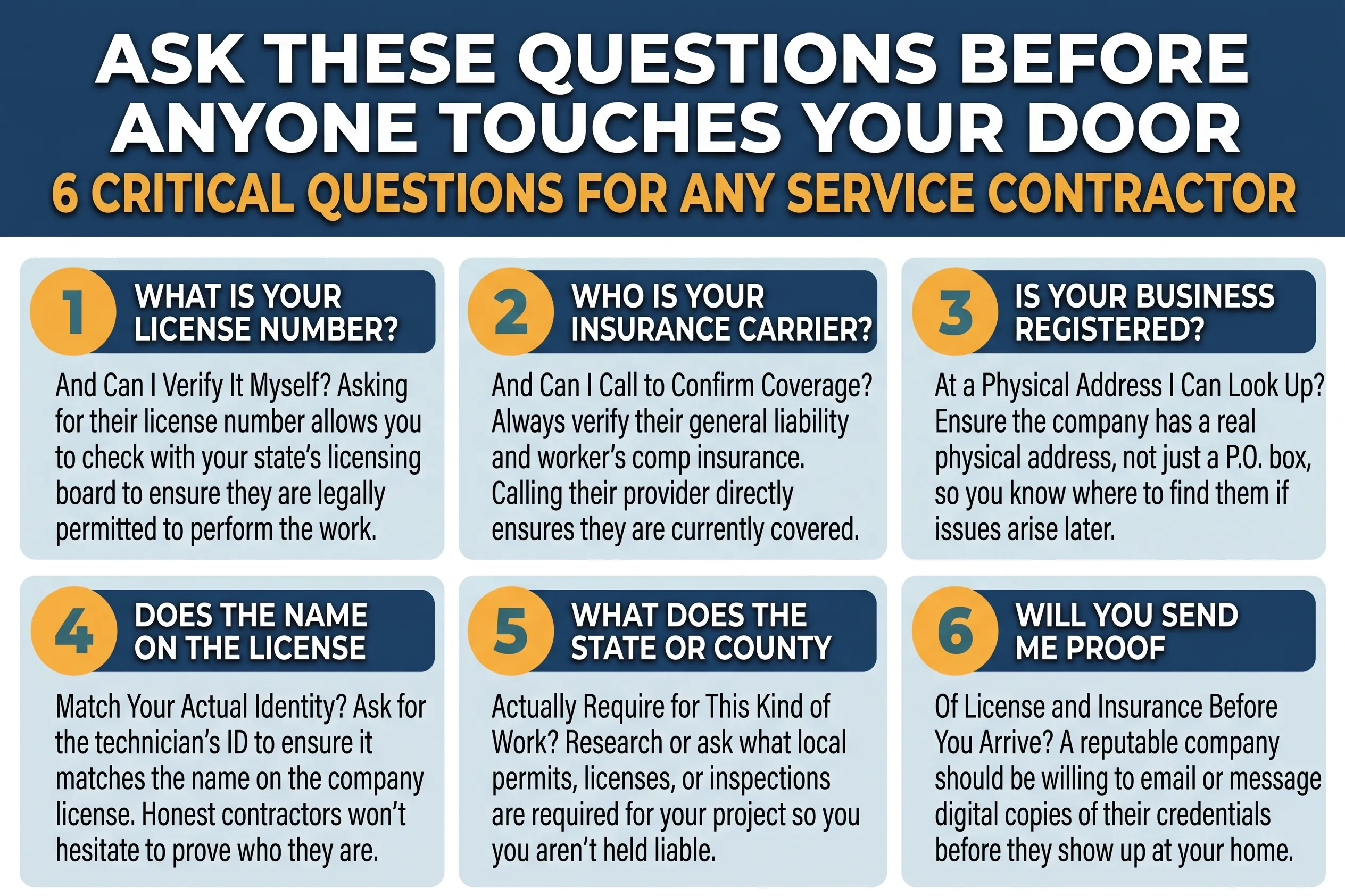
Ask for the technician’s license number and the insurance carrier’s name, and confirm both directly with the issuing state board or the carrier itself, not just by looking at a card. A legitimate technician answers all six questions below without hesitation, in plain language, before any garage door repair work begins. A technician who deflects, stalls, or gives an answer you can’t verify is showing you exactly what you need to know.
Key Takeaways
- A license number means nothing until you’ve verified it with the actual licensing board.
- Insurance certificates can be faked or expired; always call the carrier directly to confirm coverage is active.
- A legitimate technician answers licensing questions immediately and without irritation.
- Licensing requirements vary by state and county, so verify locally rather than assuming a national standard.
- If a technician can’t answer these six questions, treat that as a reason to decline the work, not a minor inconvenience.
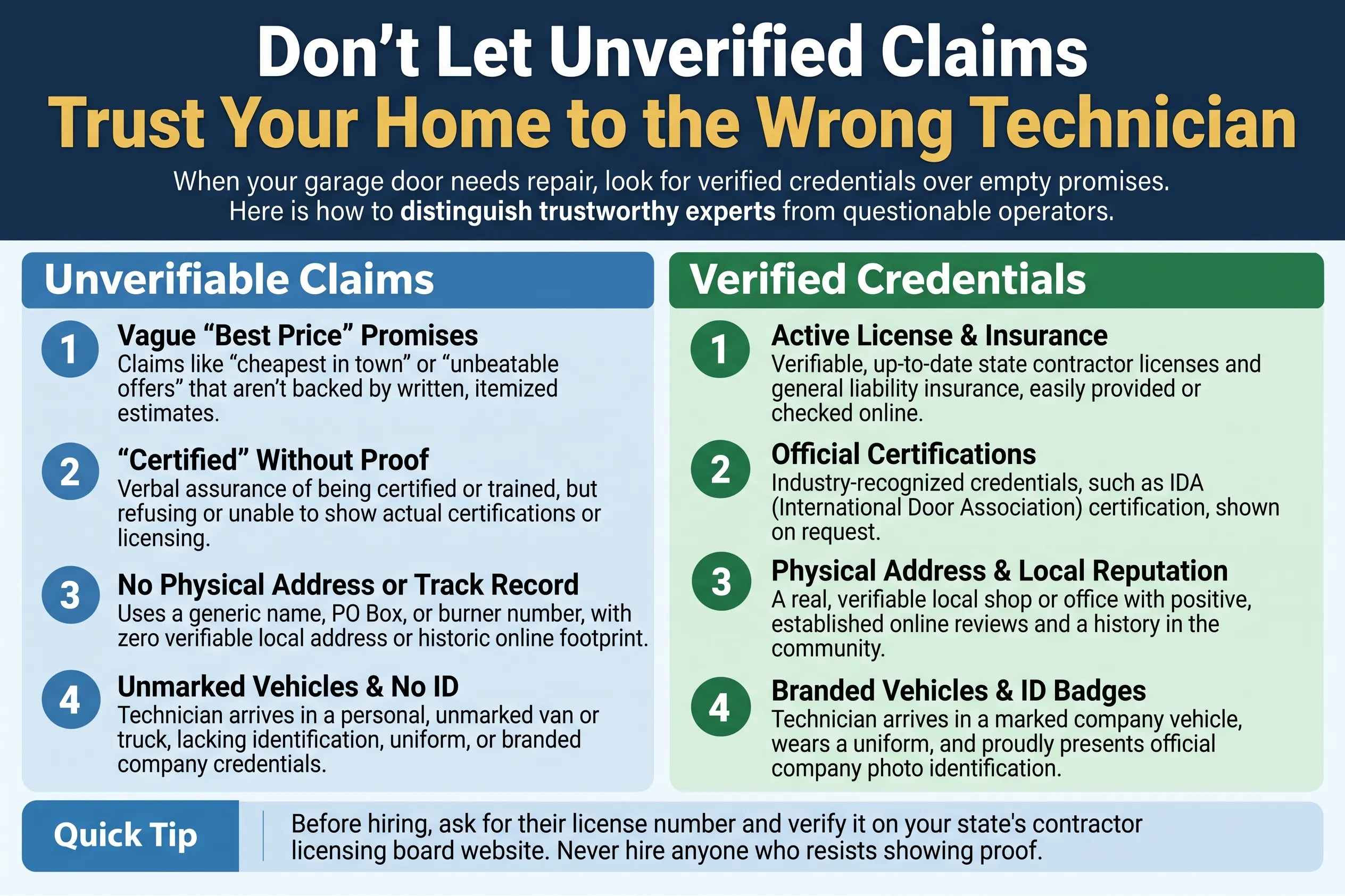
Verified Credentials vs. Unverifiable Claims
What You Ask | Verified, Legitimate | Unverifiable, Red Flag |
License number | Provided immediately, matches licensing board records | Refused, vague, or doesn’t match when checked |
Insurance carrier | Named directly, confirmed active by a phone call to the carrier | “We’re covered” with no carrier name given |
Business registration | Verifiable address and registered business name | No address, or a name that returns no results |
Technician identity | Name matches the license on file | Different name on the card than the person at your door |
Local requirements | Can explain what your state or county requires | Claims “no license needed” for a job that requires one |
Documentation | Willing to email or text proof before arrival | Only shows a card in person, nothing sent ahead |
1. What Is Your License Number, and Can I Verify It Myself?
A real license number is something a technician gives you without hesitation, because it’s public information tied to their business. The number alone doesn’t prove anything until you check it against your state or local licensing board’s own records, since a laminated card can be printed by anyone. Licensing requirements for garage door work vary significantly by state; in some areas it falls under a general contractor license, in others there’s a specific low-voltage or door and access license, so it helps to know what your local requirement actually is before you call.
How to Verify a License Number
- Ask for the number directly, spoken or written, not just shown briefly
- Search your state or county licensing board’s website for a lookup tool
- Confirm the name on the license matches the technician standing in front of you
- Note whether the license is listed as active, expired, or suspended
If you want the full list of scam warning signs beyond credentials, including pricing tricks and storm-chaser tactics, read How Do You Know If a Garage Door Repair Company Is Scamming You? 7 Warning Signs to Watch For.
2. Who Is Your Insurance Carrier, and Can I Call to Confirm Coverage?
A certificate of insurance is only useful if it’s current and if the carrier confirms it when you call. Scammers sometimes carry an expired certificate from a policy that lapsed months ago, banking on the fact that most homeowners glance at the paper and never actually dial the number on it. Asking for the carrier’s name directly, and following up with a short call, takes only a few minutes and removes any doubt.
How to Confirm Insurance Coverage Is Active
- Ask for the insurance carrier’s name and policy number
- Call the carrier directly using a number you find independently, not one given by the technician
- Confirm the policy covers liability for property damage and worker injury
- Ask for the certificate to be emailed to you as a record
The International Door Association’s scam awareness resource recommends exactly this kind of verification and provides a way to report a company directly if you later find out the credentials didn’t hold up, an independent check against a company’s own claims.
3. Is Your Business Registered at a Physical Address I Can Look Up?
A legitimate garage door repair company has a real business address, one that shows up when you search for it, and matches what’s printed on any invoice or estimate. Scammers frequently operate without any fixed location, running the business entirely out of a truck and a cell phone number, which makes them nearly impossible to hold accountable if something goes wrong. A real address also means there’s somewhere to send a complaint or a legal notice if a dispute ever needs to go that far, something a cell-phone-only operation is specifically designed to avoid.
How to Verify a Company’s Business Address
- Search the company’s name plus its claimed address to confirm it’s a real, existing business location
- Check whether the address matches what appears on any invoice or estimate
- Look for a business listing with a history longer than a few weeks
- Be cautious of a company that only accepts calls to a personal cell phone number
4. Does the Name on Your License Match Your Actual Identity?
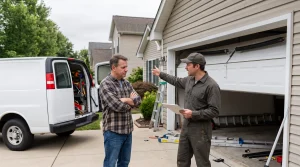
It’s not enough for a company to be licensed; the specific technician standing in your garage should be too, or should be working directly under someone who is. Some scam operations borrow a legitimate license number from an owner who never actually shows up, sending an unlicensed subcontractor to do the work instead. This matters even more for a full garage door installation, since a bigger job means more can go wrong if the person doing it isn’t actually the licensed party you verified.
How to Confirm the Technician’s Identity Matches the License
- Ask to see a photo ID alongside the license
- Confirm the name on the license matches the name on the ID
- Ask directly whether they are the licensed individual or working under someone else’s license
- If working under another license, ask how that arrangement is legally structured in your state
5. What Does My State or County Actually Require for This Kind of Work?
A technician who genuinely holds proper credentials can explain, in plain terms, what your specific state or county requires for garage door repair, installation, or electrical work on an opener. A scammer will often respond vaguely, or claim licensing isn’t required for a type of work that actually does require one in your area. The same standard applies to a technician you call for routine garage door maintenance, not just emergency repairs.
How to Learn Your Local Licensing Requirements
- Search your state’s contractor licensing board website for garage door or door and access requirements
- Ask the technician to explain the requirement in their own words, and see if it matches what you found
- Be skeptical of a blanket claim that “nobody licenses this kind of work”
The International Door Association’s LinkedIn post on garage door scam awareness reinforces this exact point, encouraging homeowners to work with credentialed dealers and to report anyone who downplays the need for a license or insurance.
6. Will You Send Me Proof of License and Insurance Before You Arrive?
A confident, legitimate company has no problem emailing or texting a copy of their license and insurance certificate before the technician ever steps foot on your property. This single request tends to separate real companies from scam operations almost instantly, since it removes any pressure of the moment and lets you verify everything calmly, in advance, with time to make a phone call or two if something doesn’t add up.
What to Do If a Company Refuses to Send Documentation in Advance
- Ask specifically why they’re unwilling to send it ahead of time
- Request it again on arrival, before any work begins
- Cancel and call a different company if they refuse both times
If you’re trying to figure out why a technician showed up at your door in the first place with unusually aggressive pricing, read Is a Garage Door Repair Quote Too Good to Be True? 5 Bait-and-Switch Pricing Tricks to Watch For, since unlicensed operators frequently rely on the same pressure tactics to close a sale quickly.
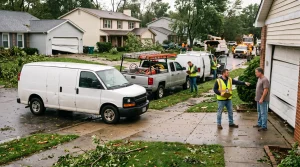
Unlicensed crews are also especially common right after severe weather, so if an unfamiliar truck showed up at your door following a storm, read Why Do Garage Door “Storm Chasers” Show Up After Every Big Storm? 4 Red Flags to Check Before You Hire before you let anyone start work.
Ask These Questions Before Anyone Touches Your Door
Verifying a license and insurance takes a few extra minutes, and it’s the single strongest protection against hiring someone who disappears after a bad repair with no way to hold them accountable. A legitimate technician welcomes these questions, because they have nothing to hide.
DoorForce LLC‘s technicians are fully licensed and insured, serving Toledo, OH, with documentation available before any visit. Contact us or give us a call and verify everything before you agree to anything.